Your Ultimate Guide to Hiking in Houston, TX
The Complete Guide to Urban Trails and Coastal Adventures in the Bayou City
Planning your next outdoor adventure in Houston doesn't have to be overwhelming, especially when you're exploring one of America's most diverse urban hiking destinations. Houston, Texas, with its unique blend of bayou trails, coastal prairies, and urban green spaces, offers something truly special for outdoor enthusiasts of every skill level and interest.
Here's what makes Houston extraordinary: you have access to over 300 miles of hiking and nature trails within the metropolitan area, plus world-class coastal hiking just an hour away. Whether you're looking to escape into nature for a weekend, create lasting memories with your family, or challenge yourself with longer trail adventures, this guide will help you make the most of your time exploring Houston's diverse landscapes.
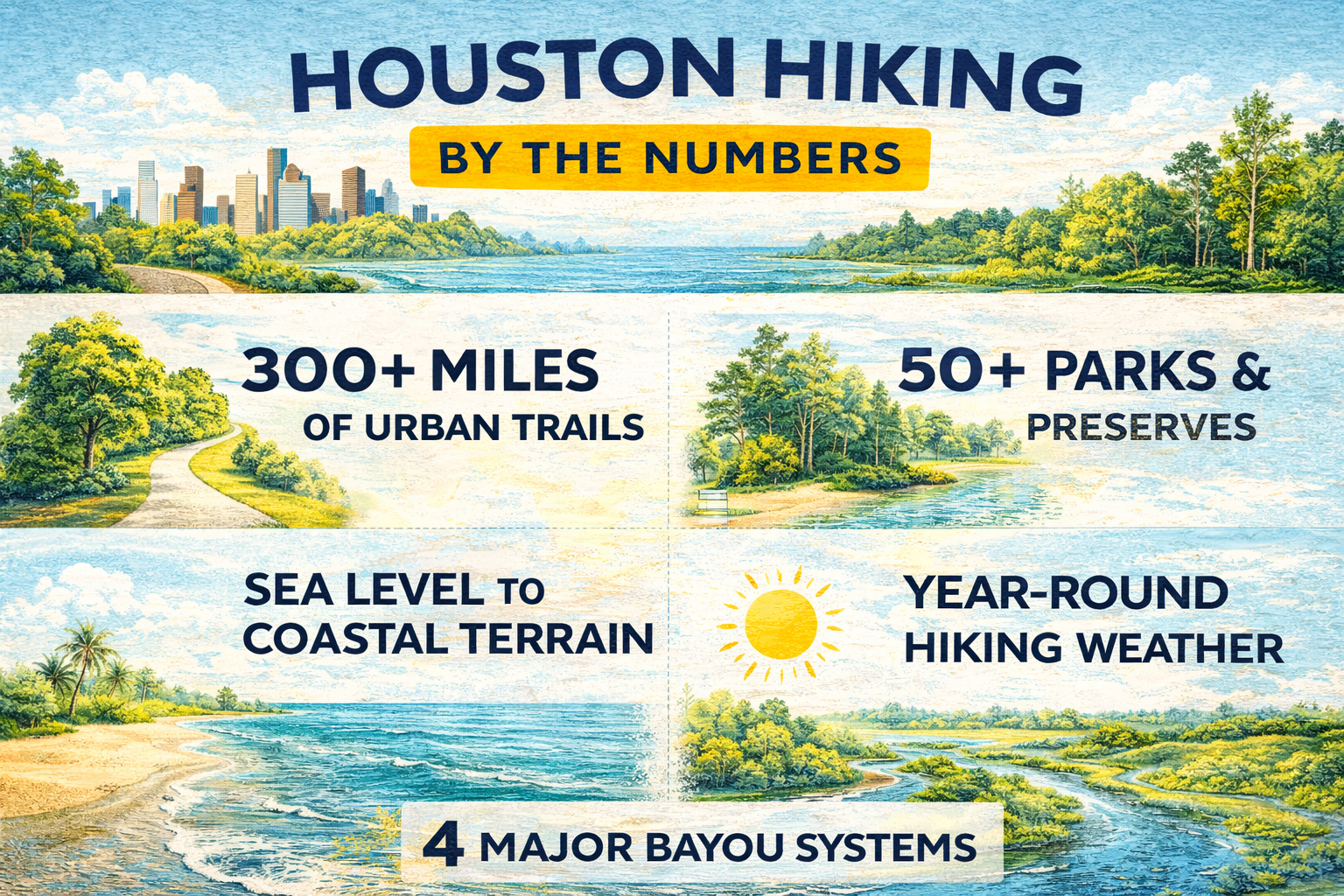
With extensive bayou networks, preserved coastal prairies, pine forests, and beaches within easy reach, Houston truly serves as your gateway to Gulf Coast adventures. The city's unique flat terrain and humid subtropical climate create ecosystems that support hiking opportunities throughout the year, though seasonal planning makes your experience more enjoyable.
URBAN TRAILS: Exploring Houston's Bayou System
Getting Started: Beginner-Friendly Urban Trails
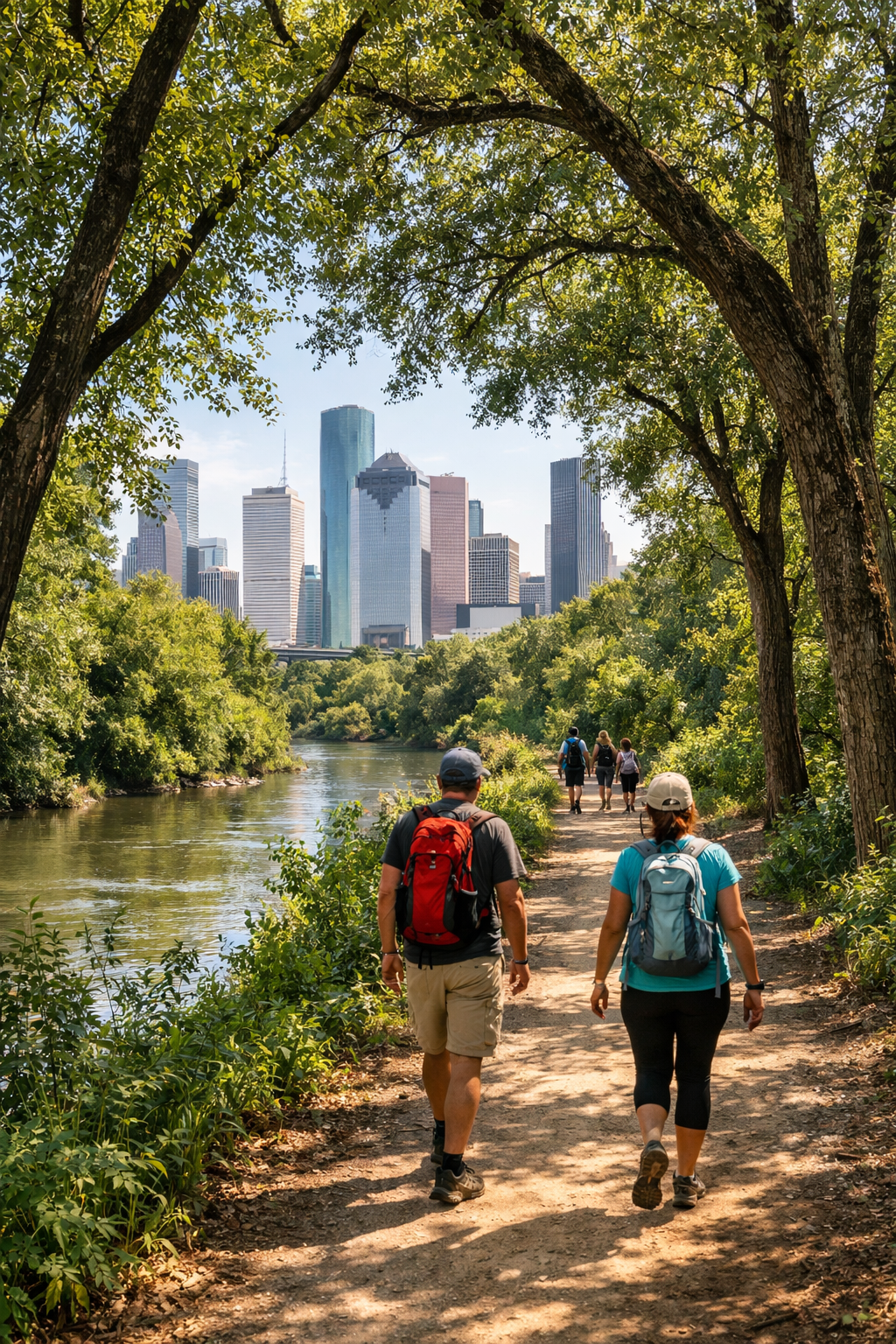
If you're new to hiking or planning a family adventure, you'll be pleased to know that Houston's bayou trails offer some of the most accessible and surprisingly beautiful urban hiking in Texas. These beginner-friendly options provide excellent experiences without requiring specialized equipment or advanced fitness.
Buffalo Bayou Park Trails: Your Gateway to Houston Hiking
The Buffalo Bayou Park trail system represents Houston's crown jewel of urban hiking. The Sandy Reed Memorial Trail stretches 2.3 miles along the bayou, connecting downtown to Memorial Park through beautifully landscaped parkland. The paved and crushed granite paths feature minimal elevation change (Houston is notably flat!), making it manageable for all fitness levels.
Here's a pro tip: visit during early morning hours (before 9 AM) to avoid the intense Texas heat and humidity, especially during summer months. The cooler temperatures and softer light make for much more comfortable hiking and better photos.
The trail passes through diverse ecosystems including riparian forest, restored prairies, and manicured parkland. Watch for great blue herons, egrets, and turtles along the water's edge. The juxtaposition of natural beauty against Houston's dramatic skyline creates uniquely Texan photo opportunities.
Memorial Park Loop: Houston's Urban Forest
Memorial Park's trail system offers nearly 3 miles of dedicated hiking trails through one of the largest urban parks in the United States. The park's Purple and Orange Trails wind through dense pine and hardwood forest that feels surprisingly remote despite being in the heart of the city.
The well-maintained trails feature some of Houston's only noticeable elevation changes (though still modest by most standards). The canopy cover provides essential shade during hot months, making this one of Houston's most comfortable summer hiking destinations.
For families with young children, the shorter loops allow flexible distance options. You can complete a 1-mile loop or extend to the full 3-mile experience. The clearly marked trails ensure you won't get lost, even with distracted kids!
Essential Gear for Houston Hiking: What You Actually Need
What You'll Need for Urban Trails
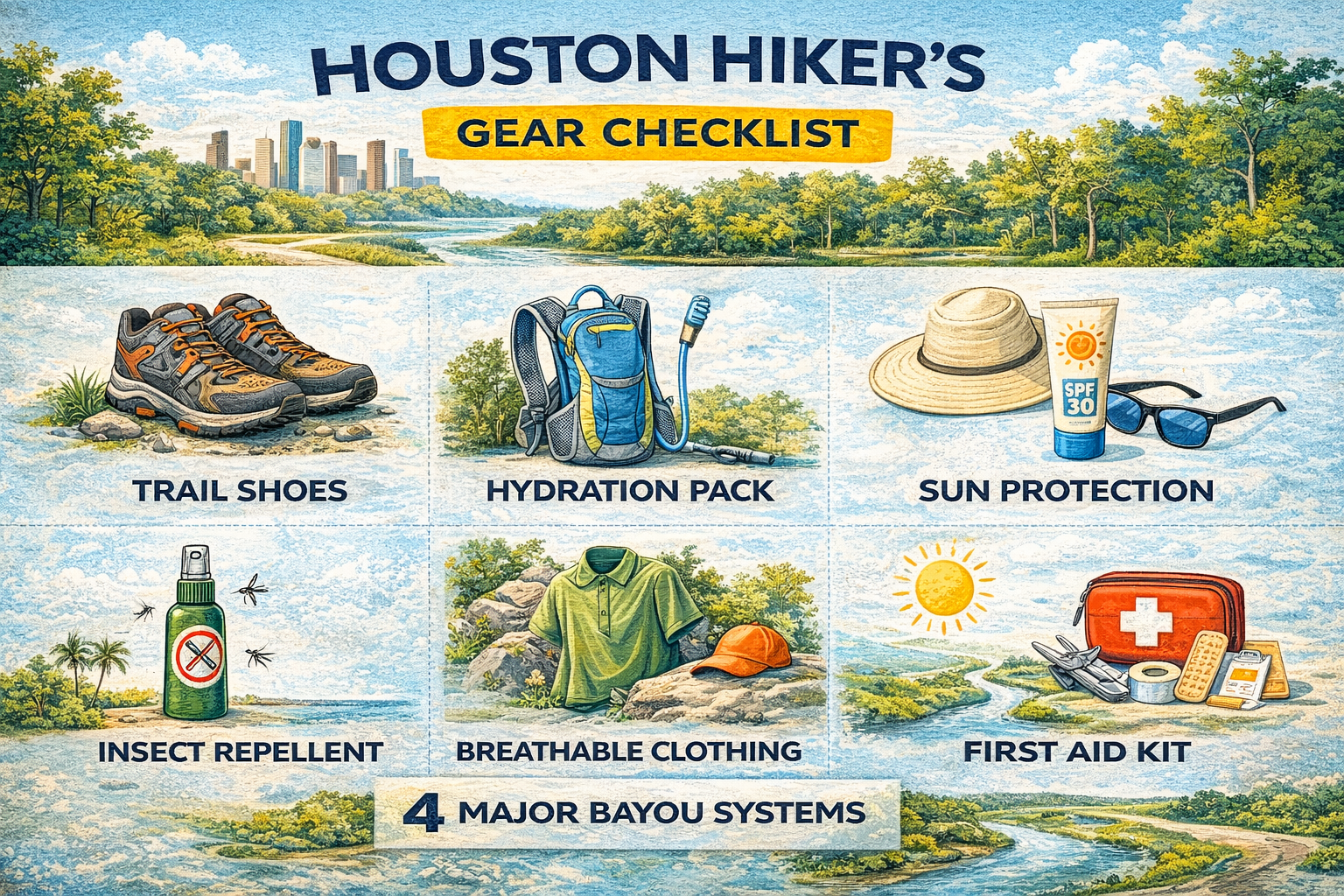
Even on easy urban trails, smart preparation makes the difference between an enjoyable outing and an uncomfortable experience. Houston's climate presents unique challenges that require specific gear considerations.
Footwear Guide for Houston Trails:
Trail Runners: Best choice for most Houston hiking. Lightweight, breathable, and quick-drying for humid conditions
Hiking Shoes: Low-cut options work well for our flat terrain while providing good traction on potentially muddy trails
What to Avoid: Heavy boots (unnecessary for flat terrain and terrible in heat), cotton socks (stay wet and cause blisters), anything not broken in
Hydration Strategy for Houston's Climate:
This is critical and different from most hiking guides: Houston's heat and humidity create extreme fluid loss. Plan for at least one liter of water per hour of hiking, more during summer months. Many experienced Houston hikers carry hydration packs rather than bottles for easier access and larger capacity.
The Houston Clothing System:
Base Layer: Lightweight, moisture-wicking synthetic or merino wool shirts (never cotton in Houston!)
Sun Protection: Long-sleeve sun shirts, wide-brimmed hats, and sunglasses are essential year-round
Quick-dry shorts or pants: Choose light colors to reflect heat
The Rule: Dress for 10 degrees warmer than the actual temperature feels due to humidity
Additional Houston-Specific Essentials:
Insect repellent: Mosquitoes are serious business along bayous and in wooded areas. DEET-based repellents work best
Sunscreen: SPF 50+ minimum, reapplied every 2 hours
Small towel: For wiping sweat (you will sweat, a lot)
Emergency rain gear: Afternoon thunderstorms develop quickly, especially in summer
Bayou Trail Networks: Exploring Houston's Waterways
Houston's extensive bayou system creates a unique trail network that connects neighborhoods, parks, and natural areas throughout the metropolitan area. These trails offer surprisingly varied experiences despite Houston's famously flat topography.
Brays Bayou Greenway: Houston's Longest Continuous Trail
The Brays Bayou Greenway extends over 30 miles from the Texas Medical Center to the Clear Lake area, making it Houston's longest continuous trail. The paved trail follows the bayou through diverse neighborhoods, offering glimpses into Houston's multicultural character alongside natural beauty.
The trail features multiple access points, allowing hikers to choose distances from 2-mile out-and-back walks to full-day adventures. The section between Hermann Park and the Medical Center provides excellent people-watching and urban scenery, while eastern sections offer more natural environments with abundant bird life.
Trail Safety Considerations:
Urban trails require different awareness than wilderness hiking. Stay alert to cyclists (announce "passing on your left" when overtaking), keep valuables secured, and avoid isolated sections during early morning or evening hours. The trails are generally very safe, but basic urban awareness applies.
White Oak Bayou Greenway: Nature in the Heights
The White Oak Bayou Greenway offers 7+ miles of trails through some of Houston's most interesting neighborhoods. The trail connects Heights Boulevard to downtown, passing through areas that blend historic Houston character with modern development.
This trail showcases Houston's ongoing bayou restoration efforts. Recently completed sections feature native plantings, improved habitat, and better flood management infrastructure. The improvements demonstrate how urban trails can serve multiple purposes: recreation, transportation, and environmental restoration.
NATURE PRESERVES: Houston's Wild Spaces
Jesse H. Jones Park & Nature Center: Forest Trails Near the City
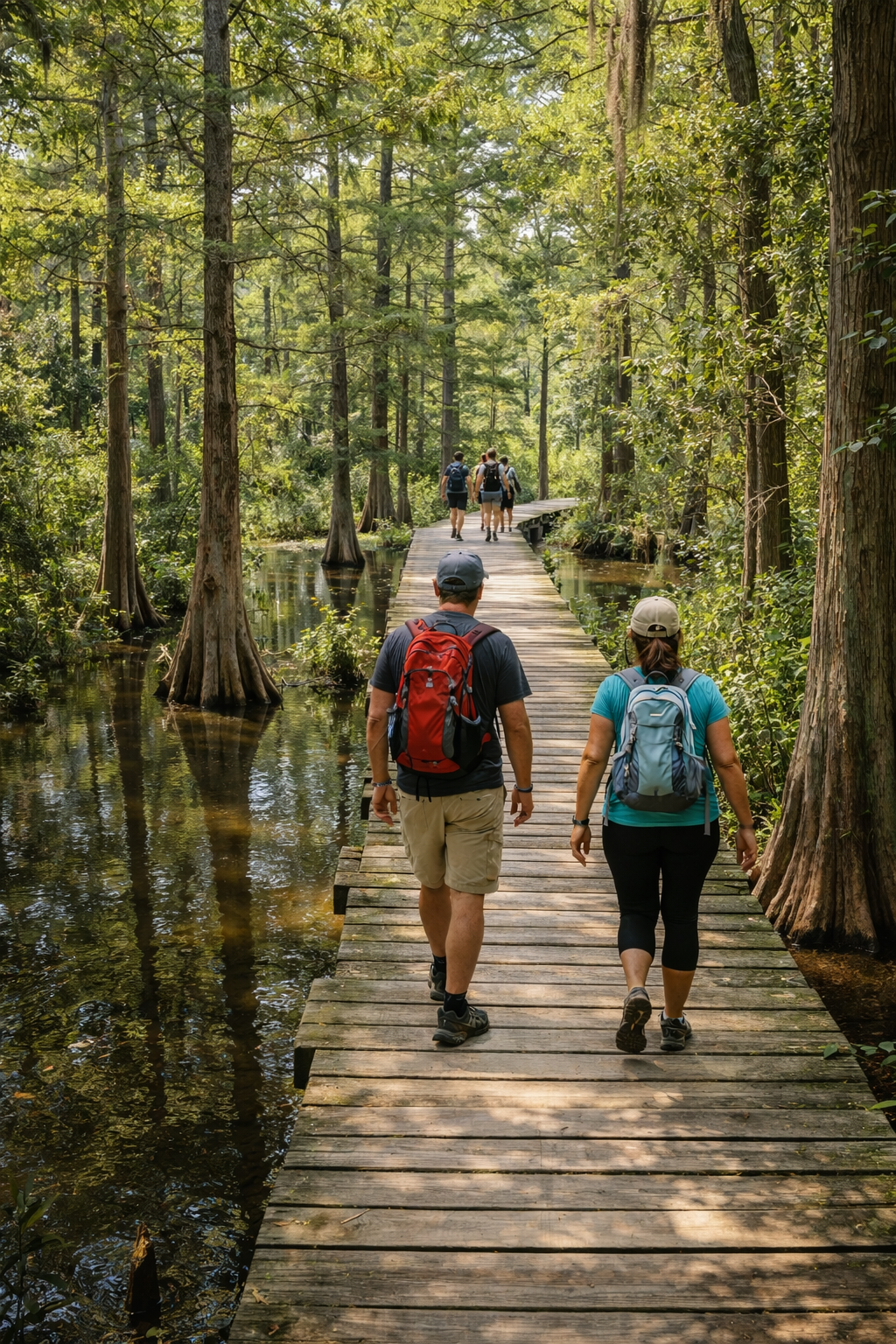
Located just 25 minutes north of downtown, Jesse H. Jones Park offers a completely different Houston hiking experience. The park's 7+ miles of trails wind through bottomland hardwood forest, rare in urban Texas, creating an almost bayou-country atmosphere.
The Spring Creek Trails follow the creek through dense forest where towering cypress, oak, and sweetgum trees create a canopy that keeps temperatures notably cooler even on hot days. Wooden boardwalks traverse wetland areas, providing close encounters with unique ecosystems.
Wildlife viewing opportunities abound here. Watch for:
Alligators (yes, really!) in the creek and wetlands
Over 200 bird species including herons, woodpeckers, and seasonal migrants
Armadillos, raccoons, and occasionally river otters
Numerous turtle species basking on logs
Wildlife Safety in Houston:
Alligators deserve respect but rarely pose threats. Maintain at least 30 feet distance, never feed them, and keep pets leashed. Alligators are most active during warmer months and typically avoid humans. Snakes, including venomous species, inhabit Houston trails. Watch where you step, especially in tall grass or near water. Most snakes flee from human noise.
Armand Bayou Nature Center: Coastal Prairie Experience
Armand Bayou Nature Center, located near Clear Lake, preserves one of the largest urban wilderness areas in the United States. The center's 6+ miles of trails traverse three distinct ecosystems: coastal prairie, bottomland forest, and estuarine bayou.
The Karankawa Trail (1.5 miles) provides an excellent introduction to the preserve's diversity. The trail passes through all three ecosystems, offering constantly changing scenery and excellent wildlife viewing. The boardwalk section over the bayou provides opportunities to spot alligators, wading birds, and fish.
Best Times to Visit:
Fall/Winter (October-March): Most comfortable temperatures, migrating birds
Spring (April-May): Wildflowers, nesting birds, but increasing heat
Summer (June-September): Very hot and humid; visit only during early morning hours
Stepping Up Your Game: Intermediate Houston Adventures
George Bush Park: Houston's Largest Trail System
George Bush Park offers over 10 miles of trails through diverse habitats west of the city. The park's size allows for extended hiking adventures rare in urban Houston. The trail system connects various ecosystems including prairie, woodland, and wetland areas.
The Fiorenza Park Trail provides a challenging 5-mile loop (by Houston standards!) with the park's most varied terrain. While still quite flat, the trail includes sections through dense forest, open prairie, and along drainage areas where seasonal flooding creates temporary wetlands.
Intermediate Hiking Considerations in Houston:
Longer Houston hikes require more careful planning than mountain hiking due to heat and lack of shade. For any hike over 5 miles:
Start before 8 AM during warm months
Carry 2-3 liters of water minimum
Plan rest stops in shaded areas
Know your turnaround point and stick to it
Download offline trail maps (cell service can be spotty)
Brazos Bend State Park: Day Trip Destination
Located about an hour southwest of Houston, Brazos Bend State Park offers the most substantial hiking near the city with 35+ miles of trails. The park's location in a major flyway and its diverse habitats support incredible wildlife populations, particularly alligators and birds.
The 40-Acre Lake Trail (1.5 miles) showcases the park's famous alligator population in their natural habitat. During warmer months, you'll likely see dozens of alligators sunning themselves along the lake shores. This trail remains extremely popular and safe despite the alligator presence—attacks are extraordinarily rare.
For more substantial hiking, the Big Creek Loop Trail extends 4 miles through varied habitat including bottomland forest, marshes, and prairie. The trail's length and exposure make it challenging during summer months but delightful in cooler weather.
Alligator Etiquette:
Maintain minimum 30-foot distance
Never approach for photos (zoom lenses exist for this reason)
Keep pets leashed and away from water edges
Stay on marked trails
Never feed wildlife
COASTAL HIKING: Beach and Wetland Adventures
Galveston Island State Park: Beach Hiking
Just 50 minutes from downtown Houston, Galveston Island State Park offers completely different hiking experiences along the Gulf Coast. The park's trails traverse coastal prairie, dunes, wetlands, and beaches, showcasing the Gulf Coast's diverse ecosystems.
The Clapper Rail Trail (1 mile) boardwalk winds through coastal marsh, providing excellent bird watching opportunities. During migration seasons, the trail teems with warblers, herons, and shorebirds. The boardwalk keeps you dry while offering intimate views of marsh ecology.
The Jenkins Bayou Trail (2 miles) loops through dunes and coastal prairie, connecting to beach access. This trail showcases adapted plant species that survive harsh coastal conditions: extreme heat, salt spray, and shifting sands.
Beach Hiking Tips:
Walk on wet sand near the water line for firmer footing
Time hikes around tides for best conditions
Wear water shoes or sandals that can get wet
Morning hours offer cooler temperatures and better wildlife viewing
Always check beach conditions before visiting
Sea Rim State Park: Remote Coastal Wilderness
For hikers seeking more adventurous coastal experiences, Sea Rim State Park (about 2 hours east of Houston) offers true wilderness hiking along the Gulf Coast. The park's Gambusia Nature Trail (1 mile) boardwalk provides easy marsh access, while beach hiking extends for miles in both directions.
The beach hiking here feels truly remote—you can walk for miles seeing only birds, crabs, and occasional beachcombers. The lack of development creates a sense of isolation rare along Texas's increasingly developed coast.
Advanced Coastal Considerations:
Beach hiking is deceptively strenuous; soft sand increases effort significantly
Carry more water than expected; heat reflects off sand and water
Sun exposure is intense; reapply sunscreen frequently
Check weather before visiting; coastal storms develop quickly
Inform someone of your plans for remote beach hiking
SEASONAL CONSIDERATIONS: Year-Round Houston Hiking
Houston's subtropical climate allows year-round hiking, but seasonal planning dramatically improves your experience.
Spring (March-May): Peak Hiking Season
Spring offers Houston's best hiking weather with moderate temperatures, lower humidity, and spectacular wildflowers. The Texas Hill Country bluebonnets steal headlines, but Houston-area prairies and parks burst with native wildflowers including Indian paintbrush, evening primrose, and coreopsis.
Spring Hiking Considerations:
Temperatures range from 60s-80s°F
Afternoon thunderstorms increase in frequency by May
Mosquito populations begin rising
Migrating birds create exceptional viewing opportunities
Trails can be muddy after spring rains
Summer (June-September): Heat and Humidity
Summer hiking in Houston requires respect for the climate. Heat indices regularly exceed 100°F, making midday hiking dangerous. However, early morning hikes (before 9 AM) remain feasible with proper precautions.
Summer Survival Strategy:
Hike only during early morning hours (6-9 AM)
Carry double your normal water
Choose shaded forest trails over exposed prairie
Watch for heat exhaustion symptoms: dizziness, nausea, confusion
Have contingency plans to cut hikes short
Fall (October-November): Second Season
Fall brings relief from summer heat and creates Houston's second excellent hiking season. Temperatures moderate, humidity drops, and fall bird migration rivals spring spectacles.
Fall Highlights:
Comfortable temperatures (60s-80s°F)
Lower humidity than summer
Decreased mosquito populations
Migrating raptors and songbirds
Subtle color changes in deciduous trees
Winter (December-February): Mild Weather Hiking
Houston's mild winters create surprisingly pleasant hiking conditions. While occasional cold fronts bring freezing temperatures, most winter days offer comfortable hiking weather in the 50s-60s°F.
Winter Advantages:
Minimal insect activity
No heat stress concerns
Clear, crisp air improves visibility
Overwintering waterfowl create excellent viewing
Trail traffic decreases
COMPREHENSIVE GEAR GUIDE FOR HOUSTON CONDITIONS
Hydration Systems for Houston Climate
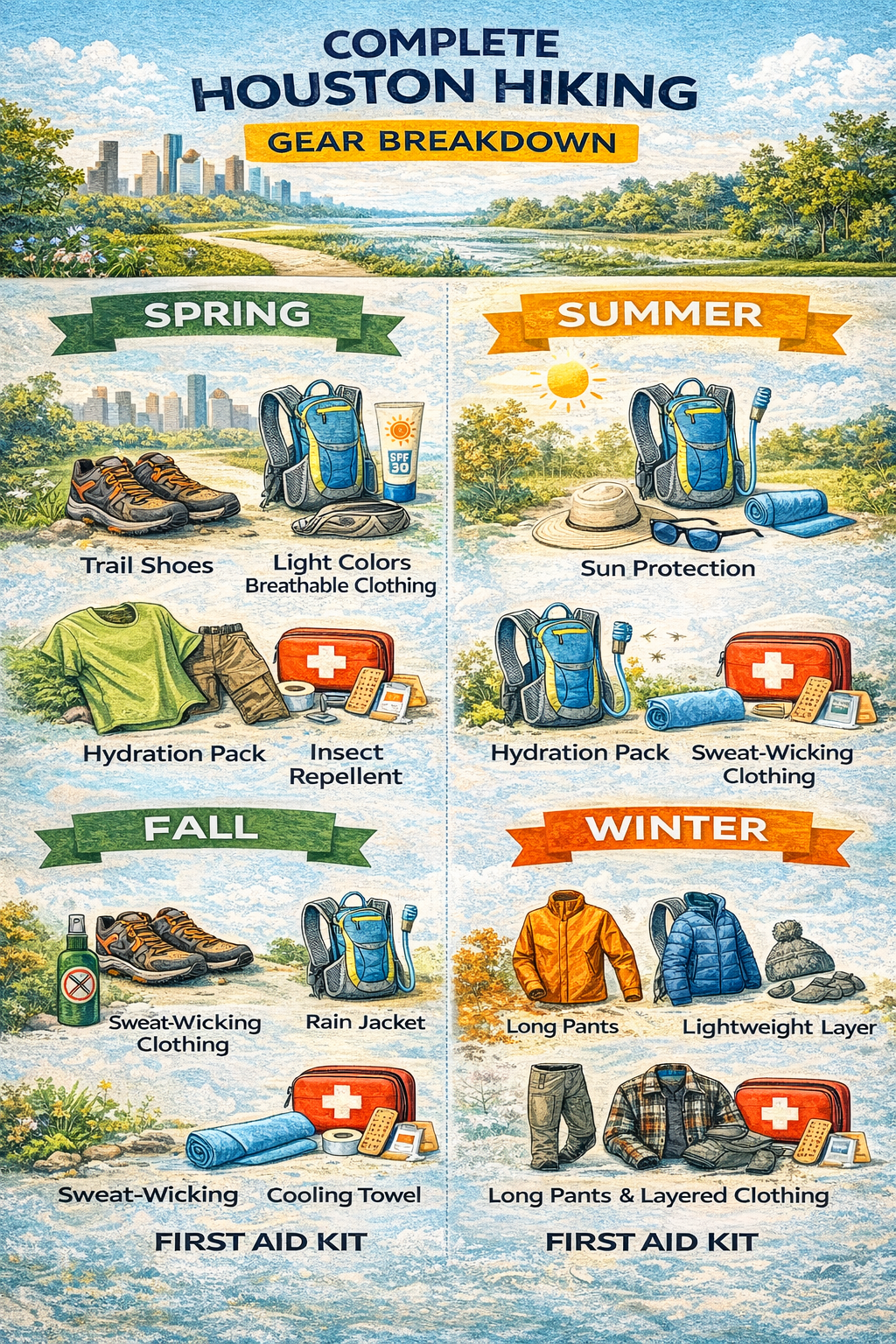
Houston's heat and humidity make hydration your top priority. Traditional water bottles work for short hikes, but longer adventures benefit from hydration systems.
Hydration Pack Advantages:
Hands-free drinking encourages more frequent hydration
Larger capacity (2-3 liters typical)
Weight distributes across back rather than hand
Insulated versions keep water cooler longer
Water Calculation: Base need of 1 liter per hour, plus:
Add 0.5 liters for temperatures above 85°F
Add 0.5 liters for humidity above 70%
Add 0.5 liters for every 5 miles beyond initial 3 miles
Sun Protection Beyond Sunscreen
Houston's intense sun requires comprehensive protection strategies.
Effective Sun Protection:
UPF-rated clothing: Long-sleeve shirts with UPF 50+ ratings
Wide-brimmed hats: Minimum 3-inch brim all around
Sunglasses: Polarized with UV protection
Neck gaiters: Protect often-forgotten neck area
Sunscreen: SPF 50+, water-resistant, reapply every 2 hours
Insect Defense Strategy
Houston's mosquitoes, ticks, and fire ants require defensive measures.
Effective Insect Protection:
DEET-based repellent (30%+ concentration) for mosquitoes
Permethrin-treated clothing for ticks and chiggers
Light-colored clothing makes ticks visible
Closed-toe shoes always
Tick checks after every hike in grassy areas
Navigation Tools for Urban Trails
While Houston trails rarely require advanced navigation, tools still prove valuable.
Recommended Navigation:
AllTrails app with offline maps downloaded
Google Maps for trailhead locations and parking
Portable battery pack to extend phone battery life
Paper maps as backup for longer or remote trails
TRAIL ETIQUETTE AND CONSERVATION
Multi-Use Trail Courtesy
Houston's trails serve hikers, cyclists, runners, and dog walkers. Proper etiquette ensures everyone's enjoyment.
Trail Right-of-Way:
Cyclists yield to hikers
Everyone yields to horses (though rare in Houston)
Uphill hikers have right-of-way
Pass on the left after announcing yourself
Step aside for faster groups
Leave No Trace in Urban Settings
Environmental conservation applies equally to urban trails.
Urban Conservation Principles:
Stay on designated trails always
Pack out all trash, including organic waste
Leave natural and cultural features undisturbed
Keep pets leashed and pick up waste
Respect wildlife from distance
Avoid trails after heavy rain to prevent erosion
LOCAL RESOURCES AND CONNECTIONS
Houston-Area Hiking Groups
Connecting with local hiking communities enhances safety and enjoyment.
Popular Groups:
Houston Hiking Society
Memorial Park Conservancy programs
Buffalo Bayou Partnership guided hikes
Texas Master Naturalist chapters
Meetup.com hiking groups
Gear Rental Through GeerGarage
Testing gear before purchasing makes financial sense, especially for Houston-specific equipment needs. The GeerGarage marketplace connects outdoor enthusiasts with rental options from local community members.
Rental Benefits:
Try different hydration systems before committing
Test technical fabrics for Houston humidity
Access quality sun protection gear
Support local outdoor community
Avoid storage issues in Houston humidity
Emergency Preparedness
Even urban trails require emergency planning.
Emergency Essentials:
Fully charged phone with emergency contacts
Basic first aid kit with blister treatment
Emergency whistle
Extra water beyond planned needs
Trail map or screenshot of route
Personal identification
List of medications and allergies
Heat Emergency Response:
If you or a hiking companion shows signs of heat exhaustion (dizziness, nausea, confusion, excessive sweating):
Move to shade immediately
Rest and cool down
Drink water slowly
Apply cool water to skin
Call 911 if symptoms worsen or consciousness changes
CONCLUSION: Embracing Houston's Unique Hiking Character
Houston's hiking scene differs dramatically from mountain or desert destinations, but that doesn't diminish its value. The city's extensive trail networks, diverse ecosystems from bayous to coast, and year-round accessibility create unique opportunities.
Success in Houston hiking comes from embracing local conditions rather than fighting them. Early morning starts, aggressive hydration, and seasonal awareness transform challenging climate into manageable conditions. The rewards—urban wilderness minutes from downtown, world-class bird watching, alligator encounters, and coastal solitude—make the adaptations worthwhile.
Whether you're exploring Buffalo Bayou's urban trails during a lunch break, spending a Saturday at Brazos Bend watching wildlife, or escaping to Galveston's beaches for coastal hiking, Houston offers accessible outdoor adventures that rival any destination when approached with proper preparation and realistic expectations.
Get out there and discover what makes Houston hiking special. The trails are waiting.
This guide provides general information for hiking in Houston, Texas. Always check current trail conditions, weather forecasts, and park regulations before heading out. Conditions change seasonally and after weather events. Stay safe, hike responsibly, and enjoy Houston's diverse outdoor opportunities.