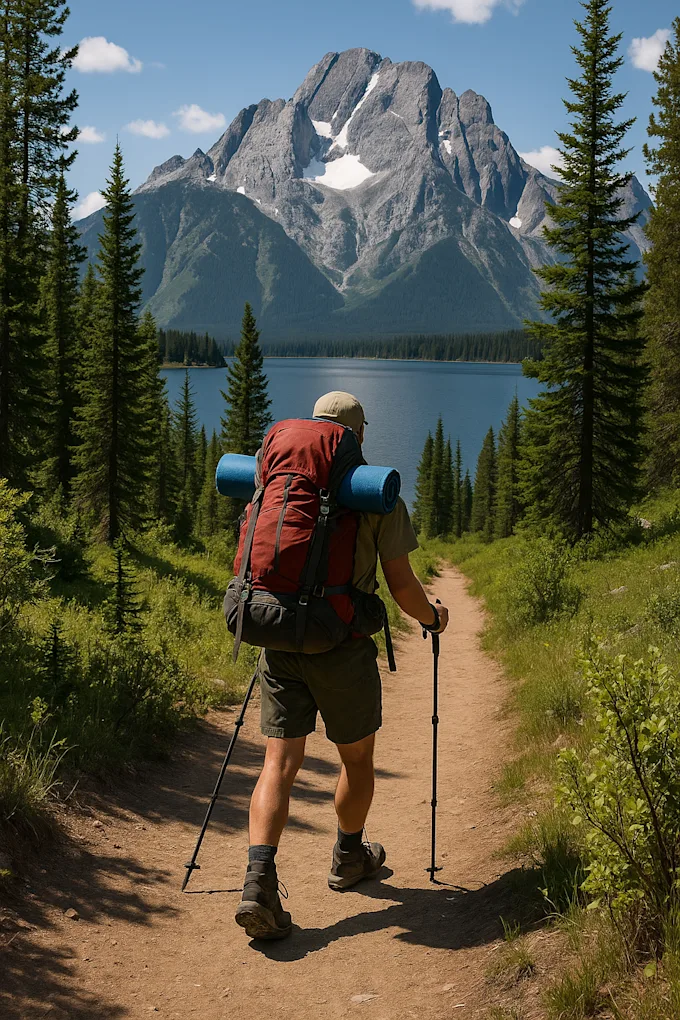
Your Ultimate Guide to Backpacking in Jackson, WY
The Complete Guide to Multi-Day Wilderness Adventures in the Tetons
Planning your backpacking adventure in one of America's most spectacular alpine environments doesn't have to be overwhelming, especially when you understand Jackson's unique position as a gateway to world-class wilderness. Jackson, Wyoming, sits at the heart of the Greater Yellowstone Ecosystem, providing access to over 230 miles of breathtaking mountain trails, high-alpine camping zones, pristine lakes, and some of the most impressive mountain wilderness in North America.
Here's what makes Jackson extraordinary for backpacking: you're positioned in a high-mountain valley that provides direct access to Grand Teton National Park's backcountry, the extensive Bridger-Teton National Forest wilderness areas, and the legendary Teton Crest Trail—one of America's premier multi-day hiking routes. With elevations ranging from 6,700 feet to 13,770 feet, rugged peaks, dramatic canyons, crystal-clear alpine lakes, and abundant wildlife, Jackson offers backpacking experiences that rank among the world's finest.

With access to the iconic 40-mile Teton Crest Trail that most backpackers complete in 3-5 days, Grand Teton National Park's competitive backcountry permit system requiring strategic planning, multiple wilderness areas including Bridger, Teton, and Gros Ventre Wilderness, and pristine alpine environments that attract adventurers from around the globe, Jackson serves as the ultimate basecamp for serious wilderness backpacking. The combination of technical terrain, extreme weather variability, and spectacular scenery creates adventures that demand advanced skills while providing rewards impossible to find elsewhere.
PERMIT SYSTEMS AND PLANNING: The Reality of High-Demand Wilderness

Grand Teton National Park Backcountry Permits
Grand Teton National Park operates one of America's most competitive backcountry permit systems, with permits required for all overnight stays in the park's wilderness areas. Understanding this system represents the crucial first step in planning any Jackson-area backpacking adventure, as failure to secure permits can derail entire trip plans.
Advanced Reservation System: The park allows reservations for only about one-third of permits in advance through Recreation.gov, with applications opening January 1st for the entire upcoming season. The remaining two-thirds of backcountry camping availability remains reserved for walk-in permits issued no more than one day in advance of starting a trip.
This system creates intense competition for permits, particularly for popular routes like the Teton Crest Trail during peak season (July-August). Successful permit acquisition requires strategic planning, flexible dates, and comprehensive backup plans for when preferred permits aren't available.
Here's a critical tip: arrive at the backcountry desk (Craig Thomas Discovery & Visitor Center in Moose) at least 2-3 hours before opening to secure a spot near the front of the walk-in permit line. Bring multiple planned itineraries and be prepared to wait potentially multiple days for permits to become available.
Mountain Camping Zones: Grand Teton's backcountry operates on a zone system rather than designated campsites, providing flexibility in exact camping locations while managing usage density. Popular zones like North Fork Cascade Canyon, South Fork Cascade Canyon, and Alaska Basin fill quickly and require strategic permit planning.
Each camping zone spans several miles, allowing backpackers to select optimal camping locations within permitted areas. Understanding zone boundaries, water sources, and terrain characteristics becomes essential for successful trip planning and wilderness navigation.
Strategic Permit Acquisition
Multiple Route Planning: Successful permit acquisition requires developing 3-5 different route options with varying start dates, camping zones, and trip lengths. This flexibility dramatically improves chances of securing permits while ensuring backup plans when preferred routes aren't available.
Shoulder Season Advantages: May and September offer significantly better permit availability while maintaining most seasonal access and spectacular scenery. Early season requires snow travel skills and equipment, while late season provides stable weather and exceptional fall colors.
Walk-In Permit Strategy: Walk-in permits require arriving with detailed itinerary planning, alternative route options, and patience for potentially multi-day waits. Successful walk-in permit acquisition often requires flexibility to start immediately when permits become available.
TETON CREST TRAIL: America's Premier Alpine Backpacking Route
Route Overview and Logistics
The Teton Crest Trail spans approximately 40 miles through the southern half of Grand Teton National Park, connecting multiple wilderness areas and providing arguably the most scenic backpacking experience in the Lower 48. Most backpackers complete the trail in 3-5 days, though strong hikers can push through in a single long day.
Primary Route Options: The classic Teton Crest Trail runs from Phillips Bench Trailhead (Highway 22) to Leigh Lake Trailhead via Paintbrush Canyon. However, multiple access points allow for shortened or extended versions depending on time constraints, permits, and experience levels.
The Aerial Tram Option at Teton Village provides popular route variation, eliminating the initial 4.25 miles and 2,500-foot climb by ascending via chairlift to Rendezvous Peak at 10,450 feet. Adult tram tickets cost $35 when purchased online ($42 at the window), with the first tram departing at 9:00 AM and last descent at 5:30 PM.
Technical Route Sections: The Teton Crest Trail crosses several high passes including Paintbrush Divide, Static Peak Divide, and Fox Creek Pass, with elevations consistently above 8,000 feet and multiple sections exceeding 10,000 feet. These crossings require snow travel skills and ice axes as late as August, particularly early in the season.
Iconic Trail Highlights
Lake Solitude and Paintbrush Canyon represent the trail's northern terminus, offering spectacular alpine lake camping surrounded by towering granite walls. This destination requires strenuous approach hiking but rewards backpackers with some of America's most scenic wilderness camping locations.
Death Canyon Shelf provides the trail's most dramatic high-altitude traverse, following narrow ledges carved into vertical canyon walls with exposure that demands comfort with heights and mountain travel. The shelf offers commanding views of Jackson Hole valley and surrounding mountain ranges.
Alaska Basin crosses into Idaho's Jedidiah Smith Wilderness, providing the trail's only section outside Grand Teton National Park boundaries. This high alpine basin offers spectacular camping beneath the Teton Range's western slopes with fewer permit restrictions than national park zones.
Hurricane Pass at 10,372 feet elevation offers panoramic views of the entire Teton Range, Jackson Hole valley, and distant Wind River Range. The pass often holds snow well into summer, requiring technical travel skills and appropriate equipment for safe crossing.
Water Sources and Logistics
Seasonal Water Availability: Water sources along the Teton Crest Trail vary dramatically with seasonal snowmelt, rainfall, and elevation. Early season (June-July) typically provides abundant water, while late season (August-September) may require longer carries between reliable sources.
Critical Water Planning: Several sections of the trail require careful water planning, particularly the Death Canyon Shelf traverse where reliable sources may be scarce. Carrying purification systems and backup treatment methods becomes essential for multi-day wilderness travel.
Resupply Limitations: The Teton Crest Trail offers no resupply opportunities, requiring backpackers to carry all food and equipment for the entire journey. This limitation demands careful menu planning and pack weight optimization for comfortable multi-day travel.
HIGH-ALTITUDE WILDERNESS SKILLS: Essential Teton Techniques

Snow Travel and Mountaineering Skills
Ice Axe Proficiency: High passes on the Teton Crest Trail and other alpine routes often retain snow through summer, requiring competence with ice axe use including self-arrest, step cutting, and safe travel on steep snowfields. These skills become essential rather than optional for safe travel.
Route Finding in Alpine Terrain: Above treeline navigation requires different skills than forest trail following, with cairn reading, topographic interpretation, and terrain association becoming critical abilities. Weather conditions can reduce visibility dramatically, making navigation skills essential for safety.
Altitude Adaptation: Jackson's high-elevation backpacking routes regularly exceed 10,000 feet, affecting physical performance and increasing risks of altitude-related illness. Understanding altitude effects and adaptation strategies becomes important for successful high-country travel.
Technical Terrain and Exposure
Class 2 and 3 Scrambling: Some Teton backpacking routes involve technical terrain requiring basic rock scrambling skills and comfort with exposure. Understanding when to rope up and basic rope skills may be necessary for safe passage on certain routes.
River Crossings: Spring snowmelt creates challenging stream crossings throughout Teton wilderness areas, requiring understanding of safe crossing techniques, timing considerations, and emergency response if crossings become dangerous.
Weather Recognition: Mountain weather changes rapidly and dramatically in the Tetons, with afternoon thunderstorms developing suddenly and creating dangerous lightning exposure on high ridges. Understanding weather pattern recognition becomes essential for safety planning.
BEAR COUNTRY BACKPACKING: Advanced Wildlife Safety
Grizzly and Black Bear Management
Grand Teton National Park supports both grizzly and black bear populations throughout backcountry areas, making bear safety skills essential rather than optional for all overnight wilderness travel. Understanding bear behavior, proper food storage, and encounter protocols can prevent dangerous situations while protecting both humans and wildlife.
Bear-Proof Food Storage: All food, toiletries, cooking equipment, and scented items must be stored in approved bear canisters or using proper counterbalance hanging techniques specific to different camping zones. The park provides detailed food storage requirements that vary by location and must be followed precisely.
Campsite Selection and Management: Proper campsite selection in bear country requires understanding wind patterns, natural travel corridors, and food storage logistics. Cooking areas must be located away from sleeping areas, with all food odors eliminated from camping zones before dark.
Encounter Protocols: Understanding appropriate responses to different types of bear encounters—including surprise encounters, defensive behavior, and predatory behavior—becomes essential knowledge for backcountry travel. Bear spray effectiveness and proper deployment techniques require training and practice.
Other Wildlife Considerations
Moose Encounters: Grand Teton's large moose population creates potentially dangerous encounters, particularly during breeding season (September-October) and when females have calves. Moose attacks are more common than bear attacks and require specific avoidance and response strategies.
Mountain Lion Awareness: While encounters are rare, mountain lions inhabit Teton wilderness areas and require understanding of appropriate behavior including maintaining eye contact, appearing large, and fighting back if attacked.
Elk and Bison Safety: Large ungulates can be unpredictable and dangerous, particularly during rutting seasons. Understanding wildlife behavior and maintaining appropriate distances prevent most dangerous encounters while allowing spectacular wildlife viewing opportunities.
WEATHER AND SEASONAL CONSIDERATIONS

Seasonal Windows and Conditions
Early Season (June-July): Provides abundant water sources, spectacular wildflower displays, and fewer crowds but requires snow travel skills and appropriate equipment for high-altitude crossings. Many passes remain snow-covered through July, requiring ice axes and potentially crampons.
Peak Season (July-August): Offers optimal weather conditions and full trail accessibility but also maximum crowds and most competitive permit acquisition. Afternoon thunderstorms develop regularly, requiring early starts and weather awareness for lightning safety.
Late Season (August-September): Features stable weather patterns, spectacular fall colors, and peak wildlife activity including elk rutting season. However, water sources become scarce and stream crossings may be easier due to lower water levels.
Winter Conditions (October-May): Create extreme conditions unsuitable for most backpackers, with deep snow, extreme cold, and serious avalanche hazards requiring specialized mountaineering skills and equipment.
Mountain Weather Patterns
Diurnal Weather Cycles: Teton weather typically features clear morning conditions followed by afternoon thunderstorm development, particularly during summer months. Understanding these patterns allows for strategic timing of high-altitude crossings and exposed ridge travel.
Rapid Weather Changes: Mountain conditions can transition from clear to dangerous within hours, requiring constant weather monitoring and appropriate gear for sudden changes. Emergency shelter and warm layers remain essential even during apparently stable conditions.
Lightning Safety: High-altitude terrain and frequent thunderstorms create serious lightning hazards requiring understanding of safe timing, route selection, and emergency procedures when caught in exposed positions during storms.
GEAR SELECTION: Mountain Wilderness Equipment
High-Altitude Specific Equipment
Four-Season Shelter Systems: Teton backpacking requires shelters capable of handling extreme weather including high winds, heavy precipitation, and potential snow even during summer months. Three-season shelters may be inadequate for mountain conditions.
Cold Weather Sleep Systems: Nighttime temperatures regularly drop below freezing even during summer, requiring sleeping bags rated to at least 15°F with quality insulation pads providing R-values of 4 or higher to prevent ground heat loss.
Technical Mountaineering Equipment: Ice axes, microspikes or crampons, helmets for rockfall protection, and potentially basic climbing gear become necessary rather than optional for many Teton routes.
Weight Optimization for Alpine Travel
Ultralight Principles: Long approaches and significant elevation gain make pack weight critical for comfort and safety. However, weight reduction cannot compromise safety margins in technical mountain terrain where gear failure can have serious consequences.
Multi-Use Equipment: Every item must justify its weight through multiple functions or essential safety requirements. Trekking poles that double as shelter supports, clothing that layers efficiently, and equipment that serves backup functions optimize pack weights.
Emergency Equipment: Mountain travel demands comprehensive emergency preparedness including first aid supplies, emergency shelter, extra food, and communication devices that add weight but provide crucial safety margins in remote wilderness areas.
REGIONAL WILDERNESS AREAS: Beyond Grand Teton

Bridger-Teton National Forest Opportunities
Bridger Wilderness offers over 428,000 acres of pristine mountain wilderness with fewer permit restrictions than Grand Teton National Park. The area features spectacular alpine lakes, technical climbing, and solitude impossible to find in more popular areas.
Teton Wilderness provides 585,238 acres of remote backcountry with extensive trail systems, excellent wildlife viewing, and traditional wilderness experiences. This area sees significantly fewer visitors than Grand Teton National Park while offering equally spectacular mountain scenery.
Gros Ventre Wilderness features rugged badlands terrain, unique geology, and remote backcountry adventures with minimal crowds and few restrictions. The area offers different scenery and experiences from typical Teton Range adventures.
Multi-Day Wilderness Loops
Wind River High Route accessible from Jackson provides technical high-altitude backpacking through some of Wyoming's most remote wilderness. This route requires advanced mountaineering skills but offers world-class alpine adventures with minimal crowds.
Yellowstone Backcountry Connections allow for extended wilderness adventures combining multiple national parks and forest areas. These routes require complex permit coordination but enable week-long or longer wilderness expeditions.
Continental Divide Trail Sections pass through areas accessible from Jackson, providing opportunities for section hiking on one of America's premier long-distance trails while exploring diverse wilderness areas.
ADVANCED ROUTE PLANNING
Multi-Day Itinerary Development
Distance and Elevation Planning: Teton backpacking involves significant daily elevation changes and technical terrain that slow travel compared to typical hiking speeds. Conservative mileage planning prevents dangerous situations when darkness approaches with difficult terrain remaining.
Water Source Strategy: Detailed water planning becomes crucial for route selection and daily mileage decisions. Carrying extra water capacity or purification backup ensures safety when reliable sources are scarce or contaminated.
Escape Route Planning: Mountain weather and potential injuries require identifying emergency exit routes and communication points throughout planned itineraries. Understanding helicopter landing zones and evacuation procedures becomes important for remote wilderness travel.
Navigation and Route Finding
Topographic Map Skills: Complex alpine terrain requires advanced map reading skills including contour interpretation, terrain association, and route finding in conditions with limited visibility.
GPS and Technology Integration: While GPS devices provide valuable backup navigation, mountain terrain can block satellite signals and batteries fail in cold conditions. Traditional navigation skills remain essential primary navigation methods.
Weather-Based Route Decisions: Understanding how weather affects route safety and making real-time route modifications based on changing conditions requires experience and judgment that develops through practice and education.
PHOTOGRAPHY AND WILDERNESS DOCUMENTATION

Alpine Photography Considerations
Golden Hour Optimization: Mountain environments create spectacular lighting conditions during sunrise and sunset, but accessing optimal positions often requires predawn starts and careful positioning planning. Backpacking enables access to locations impossible for day visitors.
Weather and Light Integration: Dramatic mountain weather creates exceptional photography opportunities including storm clearing, alpenglow effects, and weather pattern documentation. However, safety must always take priority over photography objectives.
Ethical Wildlife Photography: Abundant Teton wildlife provides exceptional photography subjects, but maintaining appropriate distances and avoiding behavioral disruption requires understanding wildlife ethics and using appropriate telephoto equipment.
Gear Protection and Logistics
Weather Protection: Mountain conditions demand comprehensive protection for camera equipment including waterproof housing, cold weather battery management, and condensation prevention when transitioning between temperature extremes.
Weight and Durability Balance: Photography equipment adds significant weight to already heavy backpacking loads, requiring careful selection of essential items and leaving non-critical equipment behind for mountain travel.
SAFETY AND EMERGENCY PREPAREDNESS
Wilderness First Aid and Self-Rescue
Advanced First Aid Skills: Remote wilderness travel demands first aid capabilities beyond basic certification, including wilderness-specific protocols for hypothermia, altitude illness, trauma management, and long-term patient care when evacuation is delayed.
Communication and Rescue Coordination: Satellite communication devices provide crucial emergency communication capabilities in areas without cell service. Understanding rescue coordination procedures and helicopter landing zone requirements can save lives during emergencies.
Self-Rescue Capabilities: Many Teton wilderness areas require self-sufficiency for extended periods when weather prevents helicopter access. Developing skills for shelter construction, navigation in poor conditions, and basic medical care becomes essential.
Risk Assessment and Decision Making
Objective Hazard Recognition: Mountain environments present numerous objective hazards including rockfall, avalanche potential, river crossing dangers, and weather-related risks requiring constant assessment and route modification.
Subjective Risk Management: Understanding personal and group capabilities, fatigue effects, and decision-making degradation under stress becomes crucial for safe wilderness travel. Knowing when to turn back often prevents emergency situations.
Emergency Protocol Development: Establishing clear communication protocols, decision-making hierarchies, and emergency procedures before entering wilderness areas ensures coordinated responses when situations become dangerous.
CONSERVATION AND WILDERNESS ETHICS
Leave No Trace in Alpine Environments
High-Impact Area Management: Popular Teton destinations receive heavy use requiring exemplary Leave No Trace practices to prevent environmental degradation. Understanding concentrated use principles and durable surface camping becomes essential.
Waste Management: Proper human waste disposal in alpine environments requires understanding specific techniques for different terrain types and seasonal conditions. Pack-out requirements and gray water disposal vary by location and regulations.
Wildlife Habitat Protection: Camping and travel decisions directly affect wildlife habitat quality and behavior patterns. Understanding seasonal restrictions and habitat sensitivities helps protect wildlife populations while maintaining access.
Wilderness Advocacy and Stewardship
Access Protection: Maintaining wilderness access requires active participation in land management decisions, trail maintenance, and conservation advocacy. Understanding political and management challenges helps protect long-term access.
Community Engagement: Supporting local conservation organizations, participating in trail maintenance, and educating other backpackers about responsible practices contributes to long-term wilderness protection and community development.
Next Generation Education: Mentoring new backpackers in wilderness skills, safety practices, and conservation ethics ensures continued wilderness protection while building communities of responsible wilderness users.
SEASONAL STRATEGY AND TIMING
Optimal Season Selection
Skill-Based Season Planning: Different seasons require different skill levels and equipment, with early and late season demanding advanced capabilities while peak season offers optimal conditions but maximum competition for permits and campsites.
Weather Window Optimization: Understanding historical weather patterns, seasonal variations, and current year conditions helps optimize timing for specific routes and objectives while minimizing weather-related risks.
Crowd Avoidance Strategies: Peak season crowds can diminish wilderness experiences while creating safety hazards on narrow trails and popular campsites. Strategic timing and route selection provide spectacular experiences with fewer people.