
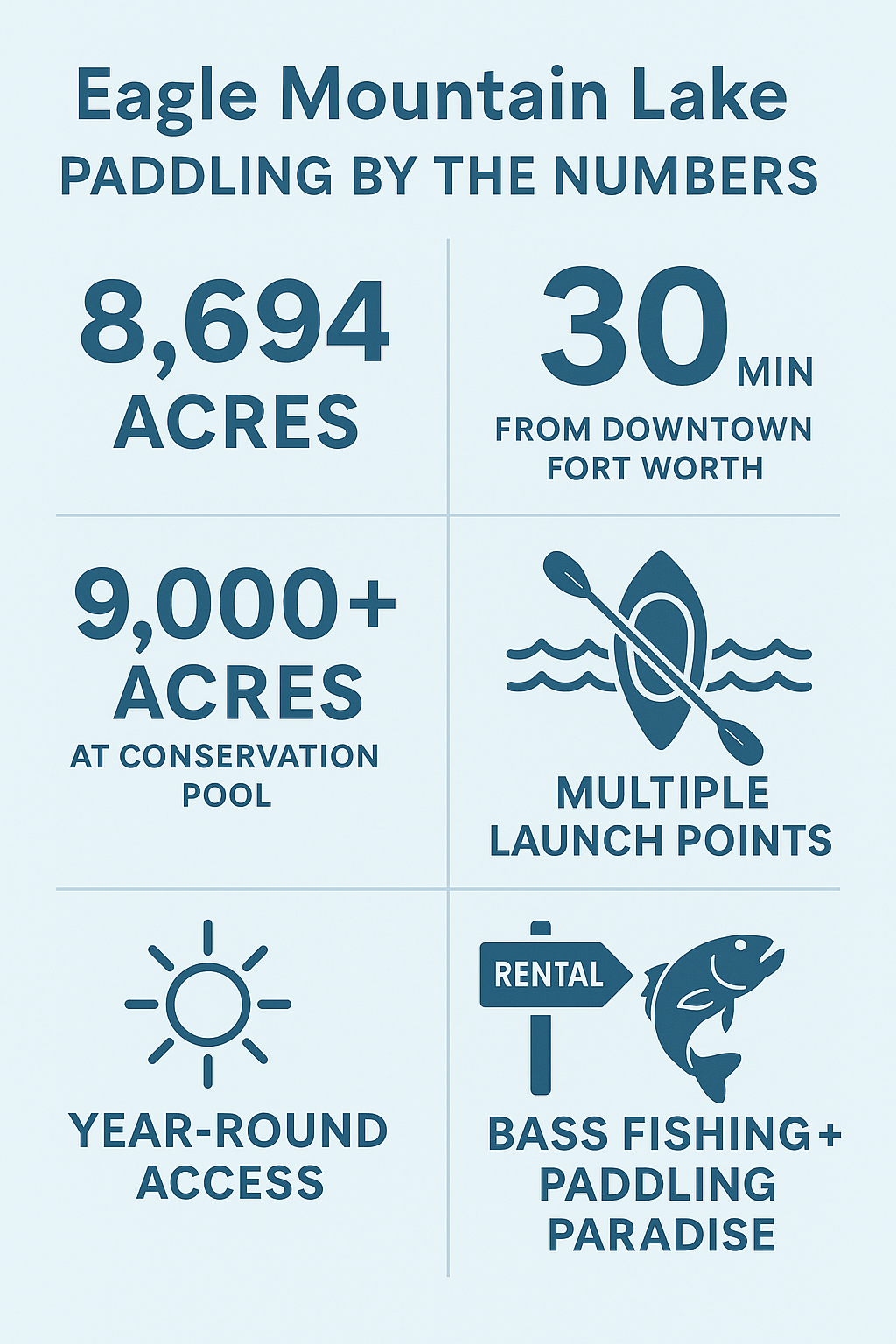
Planning your paddling adventure at Eagle Mountain Lake means accessing Fort Worth's largest and most versatile water sports destination. Located just 30 minutes northwest of downtown Fort Worth, this 8,694-acre reservoir offers everything from protected coves perfect for beginners to open water challenges for experienced paddlers, all beneath the big Texas sky with stunning sunset views and abundant wildlife.
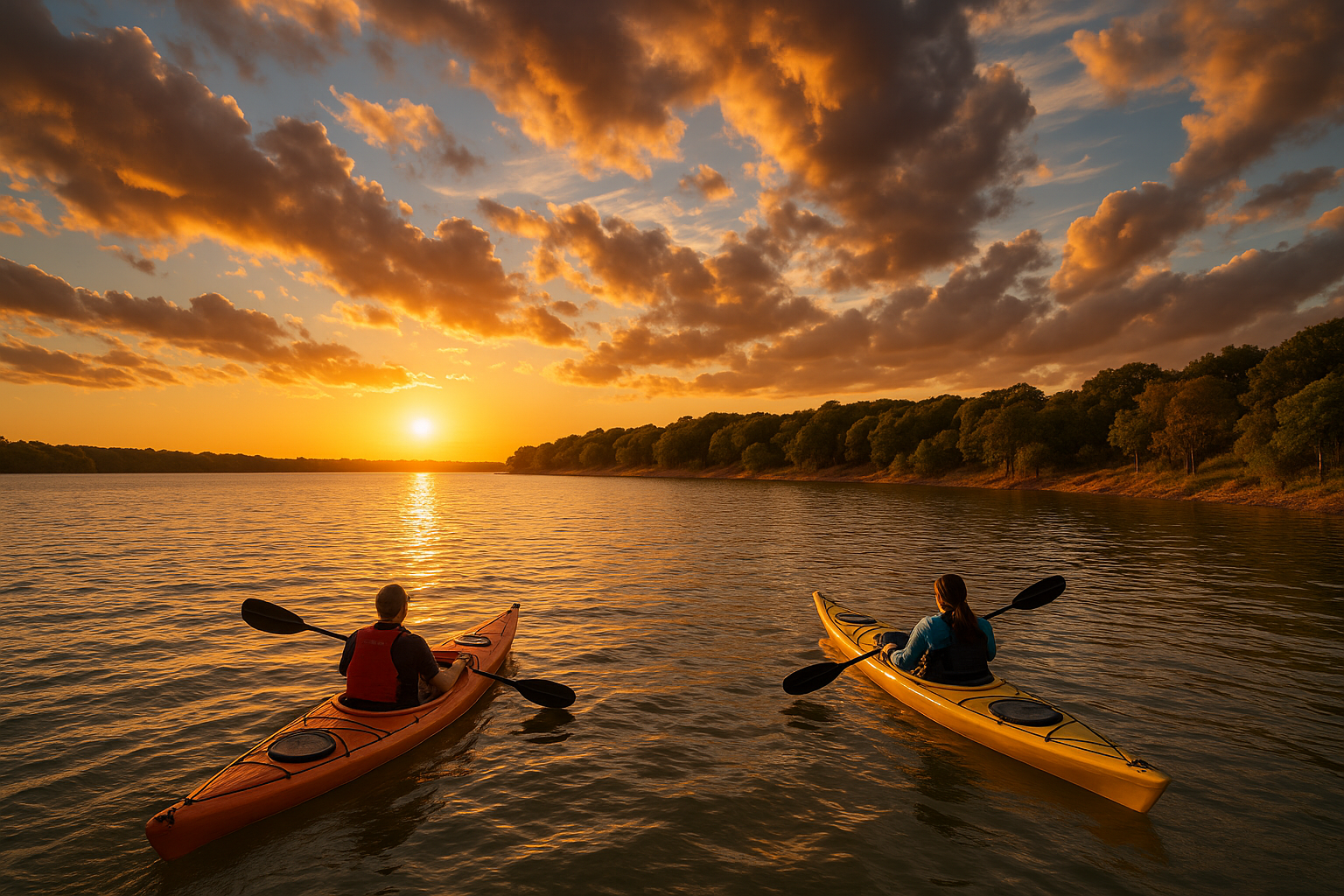
Here's what makes Eagle Mountain Lake extraordinary for paddling: you're positioned on Fort Worth's largest lake with multiple launch points offering varied experiences, less crowded than other DFW reservoirs despite being closer to the city, excellent facilities including rentals and guided tours, year-round paddling opportunities (with seasonal considerations), and the perfect combination of accessible beginner areas and challenging open water. Whether you're trying kayaking for the first time in a protected cove, exploring miles of scenic shoreline on a SUP, or challenging yourself with a cross-lake paddle in changing conditions, this guide will help you navigate Eagle Mountain Lake strategically.
UNDERSTANDING EAGLE MOUNTAIN LAKE: Your Paddling Basecamp
Lake Overview and Geography
Lake Basics:
Size: 8,694 surface acres at conservation pool elevation
Shoreline: Approximately 53 miles total
Maximum depth: 45 feet near dam
Average depth: 12-15 feet
Water source: West Fork Trinity River
Created: 1932 by damming West Fork Trinity River
Primary use: Fort Worth water supply + recreation
Location: 30 minutes northwest of downtown Fort Worth
Why Eagle Mountain Works for Paddling:
Eagle Mountain Lake offers the ideal combination of accessibility and authentic paddling experiences. Unlike smaller urban lakes that feel confined or massive reservoirs that intimidate beginners, Eagle Mountain provides varied environments from protected coves to challenging open water within a single destination.
The lake's position northwest of Fort Worth means you're escaping urban density while maintaining convenient access to city amenities. Launch your kayak by 8 AM, paddle for 3-4 hours, and still make lunch plans in Fort Worth—or spend the entire day exploring miles of scenic shoreline.
Geographic Features:
North arm: Narrower, more protected, tree-lined shores
South/central areas: Wider open water, marina development
West Fork Trinity River channel: Deeper water, boat traffic
Numerous coves and inlets: Protected paddling, wildlife habitat
Eastern shore: Eagle Mountain Park (primary public access)
Launch Points and Access
Eagle Mountain Park (Primary Public Access):
Location: 4024 Eagle Mountain Park Road, Fort Worth, TX 76135
Facilities: Boat ramp, parking, restrooms, picnic areas, fishing pier
Cost: $5 per vehicle (day use)
Hours: 7:00 AM - sunset (seasonal variations)
Best for: Beginners, families, those wanting facilities
Parking: Ample parking near launch area
Launch type: Concrete boat ramp (easy kayak/SUP access)
Private Marinas and Access:
Eagle Mountain Marina:
Kayak/SUP rentals available
Guided tours offered seasonally
Parking and facilities
Restaurant on-site
Lakeshore Marina:
Limited public access
Launch for small watercraft
Parking fees apply
Tips for Choosing Launch Points:
Eagle Mountain Park = best for beginners (facilities, protected areas nearby)
Private marinas = rental convenience, guided tour access
Early morning (7-9 AM) = easier parking, calmer conditions, wildlife active
Weekdays = significantly less crowded than weekends
Water Conditions and Safety
Typical Conditions:
Spring (March-May): Higher water levels, occasional wind, temps 60s-80s°F
Summer (June-August): Warmer water (75-85°F), afternoon wind common, busy weekends
Fall (September-November): Ideal conditions, moderate temps, lower water levels, less crowded
Winter (December-February): Cold water (45-55°F), fewer paddlers, calmer conditions
Wind Patterns:
Morning (7-11 AM): Typically calm, best paddling window
Midday (11 AM-3 PM): Wind builds, especially summer
Afternoon (3-6 PM): Strongest winds, challenging conditions
Evening (6-8 PM): Wind often calms, beautiful sunset paddles
Motor Boat Traffic: Eagle Mountain Lake allows motorized boats, creating conditions that paddlers must navigate:
Weekday mornings: Minimal boat traffic, peaceful paddling
Weekends (especially summer): Heavy boat traffic, wakes from boats
Stay visible: Brightly colored kayak/SUP, personal flotation device (PFD) mandatory
Avoid main channels: Stick to shoreline and coves during busy periods
Boat wake strategy: Point bow into wake, brace for impact, stay alert
Safety Essentials:
PFD (life jacket) required for all paddlers (must be worn)
Whistle or sound device (required safety equipment)
Weather monitoring (Texas thunderstorms develop rapidly)
Sun protection (high UV exposure, reflective water)
Hydration (bring more water than you think needed)
Communication (cell service generally good, but bring waterproof case)
PADDLING ROUTES AND EXPERIENCES
Beginner Routes: Protected Paddling
Eagle Mountain Park Cove Exploration (1-2 miles, 1-2 hours):
Route Description: Launch from Eagle Mountain Park and explore the protected coves along the eastern shoreline. Stay within sight of the park, paddling north or south along the tree-lined shore where water is calmer and boat traffic minimal.
Why This Works:
Protected from wind and waves
Easy return to launch point
Facilities (restrooms, parking) nearby
Shallow water close to shore (confidence building)
Wildlife viewing opportunities (herons, turtles, fish)
Best For:
First-time kayakers or SUP paddlers
Families with children
Skill development and confidence building
Morning or evening relaxed paddles
Conditions:
Minimal wind exposure
Clear water visibility
Sandy/rocky bottom (wade-friendly if needed)
[INFOGRAPHIC 2: "Eagle Mountain Lake Paddling Routes Map" - Visual showing beginner, intermediate, and advanced routes with distances, difficulty ratings, and key features marked]
Intermediate Routes: Shoreline Exploration
North Arm Shoreline Tour (4-6 miles, 2-3 hours):
Route Description: Launch from Eagle Mountain Park and paddle north into the narrower north arm of the lake. Follow the western shoreline, exploring coves and inlets, with option to cross to eastern shore for return trip.
Features:
More secluded than southern lake areas
Tree-lined shores create scenic paddling
Numerous small coves to explore
Wildlife more abundant (less development)
Can extend or shorten based on energy/time
Challenges:
Longer distance from launch point
Wind can funnel through narrow sections
Requires route planning and navigation
Stamina needed for return paddle
Best For:
Confident beginners progressing skills
Intermediate paddlers wanting exploration
Those seeking quieter areas
Nature and wildlife photography
Western Shore Discovery (5-7 miles, 3-4 hours):
Route Description: Launch from Eagle Mountain Park and paddle across to western shore (approximately 0.5 miles). Follow western shoreline south, exploring developed marina areas and undeveloped sections, then return via center of lake or retrace shoreline.
Features:
Mix of developed and natural shoreline
Marina areas provide rest/food options
Open water crossing builds skills
Longer adventure feeling
Challenges:
Open water crossings (boat traffic, wind exposure)
Longer distance (plan accordingly)
Navigation required (stay oriented)
Advanced Routes: Cross-Lake and Extended Paddles
Full Lake Circuit (12-15 miles, 5-7 hours):
Route Description: Circumnavigate major portions of Eagle Mountain Lake, launching from Eagle Mountain Park and making a clockwise or counterclockwise circuit that combines shoreline paddling with strategic crossings.
Requirements:
Advanced paddling skills and fitness
Experience with open water and boat wakes
Navigation and route-finding abilities
Self-sufficiency (water, snacks, sun protection)
Early start (complete before afternoon winds)
Challenges:
Distance and duration (physical endurance)
Open water exposure (wind, waves, boat traffic)
Navigation complexity
Changing conditions throughout day
No mid-route bailout options
Best For:
Experienced paddlers seeking challenge
Training for longer paddles or races
Exploring lake comprehensively
Open Water Training (Variable distance, 2-4 hours):
Route Description: Use Eagle Mountain Lake's open water sections for interval training, crossing practice, and skill development in challenging conditions. Work on specific skills like boat wake navigation, wind paddling, and endurance building.
Focus Areas:
Crossing technique (shortest line, efficient stroke)
Wake handling (positioning, bracing, timing)
Wind paddling (lower stroke, efficient movement)
Endurance building (sustained pace)
SEASONAL PADDLING GUIDE
Spring (March-May)
Conditions:
Water temps: 55-75°F (gradually warming)
Air temps: 60s-80s°F
Water levels: Higher (spring rains)
Wind: Moderate, increasingly breezy
Crowds: Moderate, building toward summer
Why Spring Works:
Comfortable temperatures (not too hot)
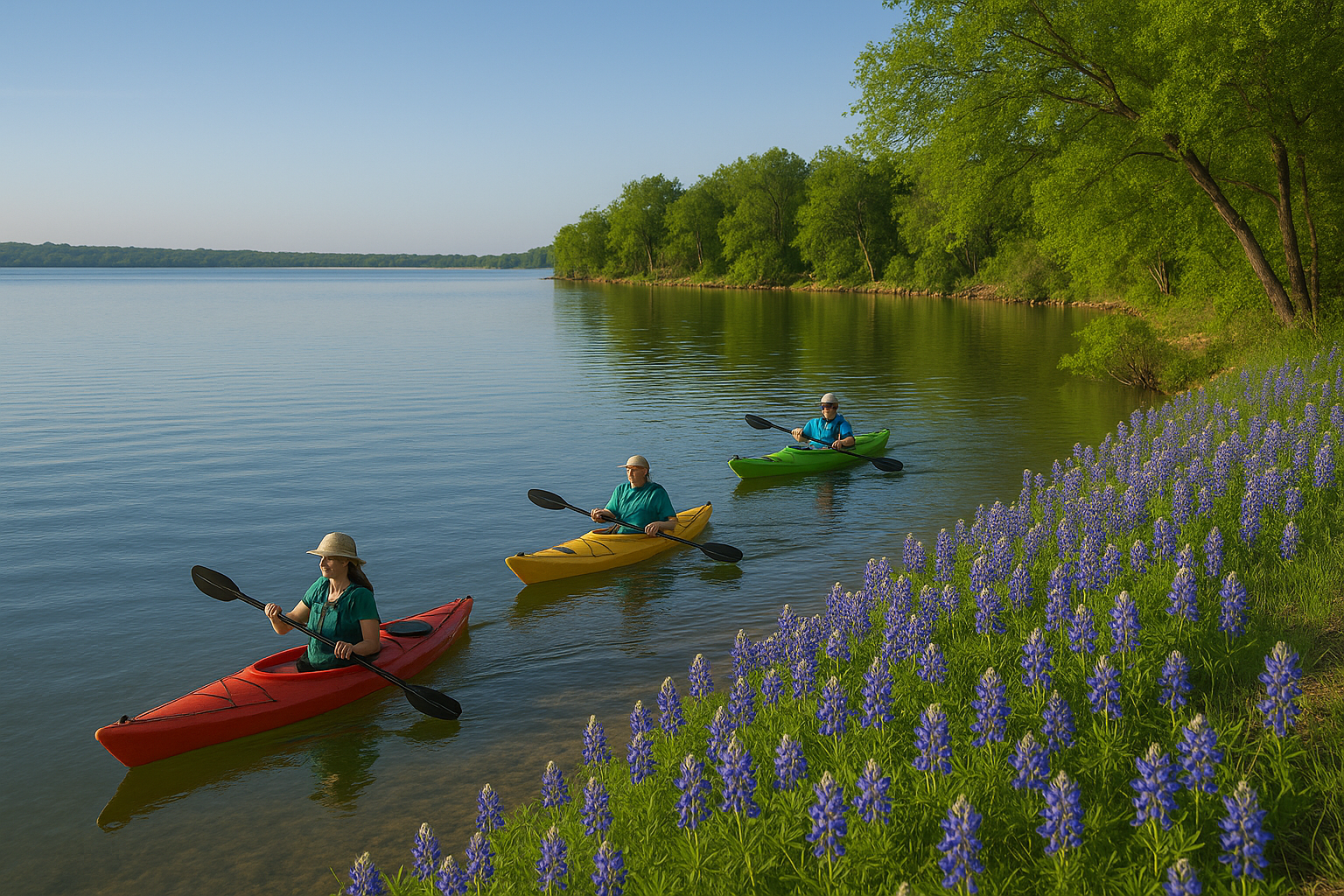
Wildflowers along shoreline
Migrating birds (excellent wildlife viewing)
Water levels higher (more shoreline access)
Fewer crowds than summer
Considerations:
Spring thunderstorms develop rapidly (monitor weather)
Water still cool (wetsuit or drysuit recommended early spring)
Wind can be gusty (especially afternoon)
Pollen on water surface (allergy sufferers note)
Best Spring Strategy: Paddle mid-morning (8-11 AM) after water warms slightly but before afternoon wind builds. Spring offers some of year's best conditions with comfortable temps and active wildlife.
Summer (June-August)
Conditions:
Water temps: 75-85°F (bath-warm)
Air temps: 90-105°F (Texas heat!)
Water levels: Lower (evaporation, usage)
Wind: Afternoon wind common
Crowds: Peak season, very busy weekends
Why Summer Challenges:
Extreme heat (heat exhaustion risk)
Busy weekends (boat traffic heavy)
Afternoon thunderstorms (lightning danger)
Lower water levels (navigation changes)
Summer Survival Strategies:
Early Morning Essential:
Launch 6:30-7:00 AM (first light)
Paddle 2-3 hours
Off water by 10 AM (before heat peaks)
Calm conditions, fewer boats, cooler temps
Evening Option:
Launch 6:30-7:00 PM (3 hours before dark)
Paddle into sunset
Cooler temps, beautiful light
Watch for afternoon storm remnants
Hydration Critical:
Bring 2-3 liters water per person
Electrolyte drinks recommended
Freeze water bottles (melts during paddle, stays cold)
Drink before thirsty
Sun Protection:
SPF 50+ sunscreen (reapply from water)
Wide-brim hat (secured with strap)
Long-sleeve UPF shirt
Sunglasses with strap
Consider sun gloves
Best Summer Days:
Weekday mornings (minimal crowds)
Post-thunderstorm evenings (cleared air, calm)
Avoid July 4th week and summer holiday weekends
Fall (September-November)
Conditions:
Water temps: 75-60°F (gradually cooling)
Air temps: 80s-60s°F (perfect!)
Water levels: Lower (summer evaporation)
Wind: Moderate, generally calm
Crowds: Significantly decreased post-Labor Day
Why Fall is Best:
Ideal temperatures (comfortable all day)
Fewer crowds (locals' secret season)
Stable weather (less thunderstorms)
Lower humidity
Beautiful fall light (photography excellent)
Calm mornings common
Fall Advantages: September through November offers Eagle Mountain Lake's best overall paddling conditions. Temperatures are comfortable, crowds thin dramatically after Labor Day, and stable weather patterns create reliable paddling windows.
Considerations:
Water cooler (wetsuit comfortable for extended paddles)
Shorter days (sunset earlier, plan accordingly)
Lower water levels (some areas shallow)
Occasional cold fronts (temperature drops rapidly)
Best Fall Strategy: Mid-morning launches (8-10 AM) allow comfortable paddling through midday without heat concerns. Fall offers all-day paddling opportunities that summer's heat prevents.
Winter (December-February)
Conditions:
Water temps: 45-55°F (cold!)
Air temps: 40s-60s°F (variable)
Water levels: Moderate
Wind: Can be strong (cold fronts)
Crowds: Minimal (nearly empty)
Why Winter Paddling:
Solitude (lake nearly empty)
Wildlife viewing (less disturbance)
Comfortable midday temps (50s-60s often)
Unique perspective on familiar waters
Winter Requirements:
Wetsuit or drysuit mandatory (cold water immersion dangerous)
Layered clothing (fleece, windbreaker)
Warm hat and gloves (neoprene paddling gloves)
Plan for cold water immersion (dress for swim, not air temp)
Check weather (cold fronts bring strong wind)
Winter Hazards:
Cold water shock (sudden immersion life-threatening)
Hypothermia (even in "mild" 50-60°F water)
Wind chill on water
Shorter daylight hours
Winter Best Practices:
Paddle midday (warmest temps, 11 AM-3 PM)
Stay close to shore (easier rescue if needed)
Paddle with partner (safety in numbers)
Tell someone your plan
Carry emergency supplies (dry clothes, warm drinks)
WHAT TO BRING
Essential Gear
Safety Equipment (Mandatory):
Personal flotation device (PFD/life jacket—must be worn)
Whistle or sound device (required by law)
Waterproof phone case (communication)
Weather radio or phone app (monitor conditions)
Paddling Gear:
Kayak or SUP (rental or personal)
Paddle (appropriate length and style)
Paddle leash (prevents loss if dropped)
Bilge pump or sponge (kayaks)
Dry bag (protect valuables)
Sun and Weather Protection:
Sunscreen SPF 50+ (waterproof, reapply)
Hat with brim (secured with strap)
Sunglasses with retention strap (polarized recommended)
Long-sleeve UPF shirt
Lightweight rain jacket (summer thunderstorms)
Hydration and Nutrition:
Water: 2-3 liters per person (more in summer)
Electrolyte drinks (summer especially)
Snacks (granola bars, trail mix, fruit)
Waterproof container for food
Navigation and Planning:
Lake map or GPS
Watch or phone (track time, conditions)
Route plan (know your distance and timing)
Clothing:
Quick-dry shorts or swimsuit
Water shoes or sandals with straps (no flip-flops)
Lightweight long pants (sun protection)
Change of clothes (left in car)
Towel
Optional but Recommended
Comfort Items:
Kayak seat cushion (comfort on long paddles)
Waterproof camera (GoPro, phone housing)
Binoculars (wildlife viewing)
Fishing rod and license (combo paddle/fish trip)
Safety Add-Ons:
First aid kit (waterproof)
Emergency blanket
Knife or multi-tool
Extra paddle (stored on kayak)
Tow rope (assist others if needed)
WILDLIFE AND NATURE
Common Wildlife Sightings
Birds:
Great blue herons: Fish along shorelines (dawn/dusk)
Egrets: White birds in shallow areas
Ospreys: Fishing raptors (dramatic dives)
Cormorants: Diving birds often seen in groups
Pelicans: Seasonal visitors (spring/fall migration)
Ducks: Various species depending on season
Aquatic Life:
Largemouth bass: Popular game fish (see anglers)
Catfish: Bottom feeders (abundant)
Turtles: Red-eared sliders sunning on logs
Fish jumping: Common sight (bass feeding)
Shoreline Animals:
White-tailed deer: Drink at water's edge (dawn/dusk)
Raccoons: Shoreline foragers
Armadillos: Occasionally visible on shore
Best Wildlife Viewing:
Early morning (6:30-9 AM): Most active period
Evening (6-8 PM): Second feeding time
Quiet paddling: Approach slowly, minimal noise
Binoculars: Bring for distant viewing
Respect distance: Don't approach or disturb
Environmental Considerations
Leave No Trace Principles:
Pack out everything you bring in
Don't disturb wildlife or nesting areas
Avoid pulling up aquatic plants
Stay on designated trails at launch areas
Report violations (littering, harassment of wildlife)
Water Quality: Eagle Mountain Lake serves as Fort Worth's water supply. Protect water quality by:
No dumping (anything)
Use designated restrooms before launch
Pack out all trash
Avoid soaps or chemicals near water
SAFETY AND REGULATIONS
Texas Boating Laws for Paddlers
Required Equipment:
PFD for each person (must be worn in Texas by law for kayaks/SUPs)
Whistle or sound device (must be accessible)
Light (if paddling after sunset, before sunrise)
Age Requirements:
Children under 13 must wear PFD at all times
Adult supervision required for minors
Right of Way:
Motorized boats have limited maneuverability (stay clear)
You are responsible for your safety (be visible, stay alert)
Avoid main channels during busy times
Alcohol:
Texas BUI (boating under influence) laws apply to paddlers
0.08% BAC limit (same as driving)
Significant fines and penalties
Emergency Procedures
If You Capsize:
Stay with your kayak/SUP (flotation device)
Re-enter if possible (practice this skill!)
If unable to re-enter, hold onto boat and paddle to shore
Signal for help if needed (whistle, wave)
Don't panic (PFD keeps you afloat)
Weather Emergencies:
Thunderstorms:
Monitor weather constantly
Get off water immediately if storm approaches
Lightning kills on water (no safe place)
Seek shelter on shore (away from tall trees)
Strong Winds:
Lower your profile (kneel in kayak, lower on SUP)
Paddle toward shore (closest safe landing)
Use low, efficient strokes
Don't fight directly into wind (angle approach)
Emergency Contacts:
911: Emergencies (injuries, lost paddlers, drowning)
Texas Parks and Wildlife: 1-800-792-1112 (non-emergency)
Tarrant County Sheriff Water Patrol: 817-884-1213
PRO TIPS FOR EAGLE MOUNTAIN LAKE
Timing Strategies:
Weekday mornings = ideal: Launch Tuesday-Thursday 7-9 AM for best conditions
Avoid summer weekends: July-August Saturdays/Sundays extremely crowded
Post-Labor Day secret: September-November offers best combination of weather and solitude
Sunrise magic: Launch at first light for glass-calm water and incredible light
Skill Development:
Start in coves: Build confidence in protected water before open lake
Progress gradually: Extend distance and challenge incrementally
Practice wet exit: Capsize intentionally near shore to learn re-entry
Learn boat wake navigation: Essential skill for Eagle Mountain
Photography Tips:
Golden hour paddles: Launch 1 hour before sunset for best light
Waterproof protection: GoPro or waterproof phone housing
Wildlife patience: Approach slowly, use telephoto/zoom
Reflections: Morning glass-calm water creates mirror images
Weather Monitoring:
Check forecast before launch: Weather.gov or weather apps
Watch sky constantly: Texas storms develop rapidly
Have exit plan: Know nearest landing if conditions deteriorate
When in doubt, stay out: Better to skip paddle than risk danger
Boat Traffic Management:
Stay visible: Bright colored kayak/SUP, wear bright PFD
Avoid main channels: Stick to shorelines when busy
Face wakes head-on: Point bow into wake, brace for impact
Early/late = less traffic: Before 10 AM or after 6 PM quieter
NEARBY ALTERNATIVES
If Eagle Mountain Lake doesn't fit your needs:
20 minutes southwest of Fort Worth
3,770 acres (smaller, more intimate)
Multiple launch points
Less boat traffic
Good for beginners
30 minutes southeast (Grand Prairie)
7,470 acres
Lynn Creek Park (good facilities)
Cedar Hill State Park access
Similar to Eagle Mountain
15 minutes northwest Fort Worth
3,560 acres (smaller)
Less crowded than Eagle Mountain
Good for quick paddles
More urban feel
60 minutes west
646 acres (intimate)
State park with camping
Very quiet
Great for overnight camping + paddling trips
Final Thoughts
Eagle Mountain Lake offers Fort Worth paddlers the ideal combination of accessibility, varied experiences, and authentic water sports adventure. The lake's size provides room to explore and progress skills, while multiple launch points and rental services make getting on the water straightforward for everyone from first-timers to experienced paddlers.
Choose Eagle Mountain Lake if: You want the largest paddling playground near Fort Worth, appreciate varied terrain from protected coves to challenging open water, value convenient access with 30-minute drive from downtown, or seek year-round paddling opportunities with seasonal variety.
The key to success: Start early for best conditions, respect the lake's power and boat traffic, build skills progressively from protected to challenging areas, and embrace Eagle Mountain's role as your paddling training ground that grows with your abilities.